From ambition to action: are we finally getting somewhere?
World Water-Tech Innovation Summit 2026
By Simon Beverley-Smith
At the end of February, I attended the World Water-Tech Innovation Summit in London. There’s no shortage of ideas across the water and flood sectors; there never has been, but some of those ideas are beginning to translate into action. Not consistently, and certainly not as quickly as some would like, but there are signs of movement.
Climate change is no longer something we plan for in the future. It is already here, shaping how drainage systems perform, how rivers behave, and how communities experience flood risk. More intense rainfall, longer wet periods, and ageing infrastructure that was never designed for these conditions are creating a very different operating environment.
After the first day of the conference, I headed out for a walk along the South Bank. After what felt like endless rain, the evening had turned warm, and the place was full of life. Bright lights, crowds everywhere, people enjoying the river and everything that comes with it. For someone more used to quieter surroundings, it was a reminder of just how many people depend on these systems working as they should.
Somewhere along the Thames, between Waterloo Bridge and Blackfriars, sat the “Fountain of Filth”. A temporary installation commissioned by Channel 4, featuring figures quite literally vomiting brown water into the Thames, created to coincide with Dirty Business, their recent drama exploring sewage pollution.
It’s easy to see it purely as a wastewater statement, but it reflects something broader. Much of what ends up in rivers and seas during heavy rainfall is linked to how systems handle stormwater. Combined networks, limited capacity and more intense rainfall all play a part.
Joined-up thinking, still catching up
One of the more encouraging themes was the recognition that water, wastewater and flood risk cannot be treated in isolation. Catchment-based approaches and working with natural processes are becoming more prominent.
This is not new, but it is gaining traction. Managing water upstream, improving infiltration and reducing runoff all influence what happens downstream.
The benefits are widely understood. The challenge is turning them into something that can be delivered at scale. The sticking point is working out who pays, who benefits, and how that value is recognised.
There are also practical challenges. Responsibilities remain split across multiple organisations, each with their own priorities and budgets. Highways, drainage, flood risk and water companies are all working towards similar outcomes, but not always in a coordinated way. The ambition is joined-up thinking; the reality is that we are still catching up.
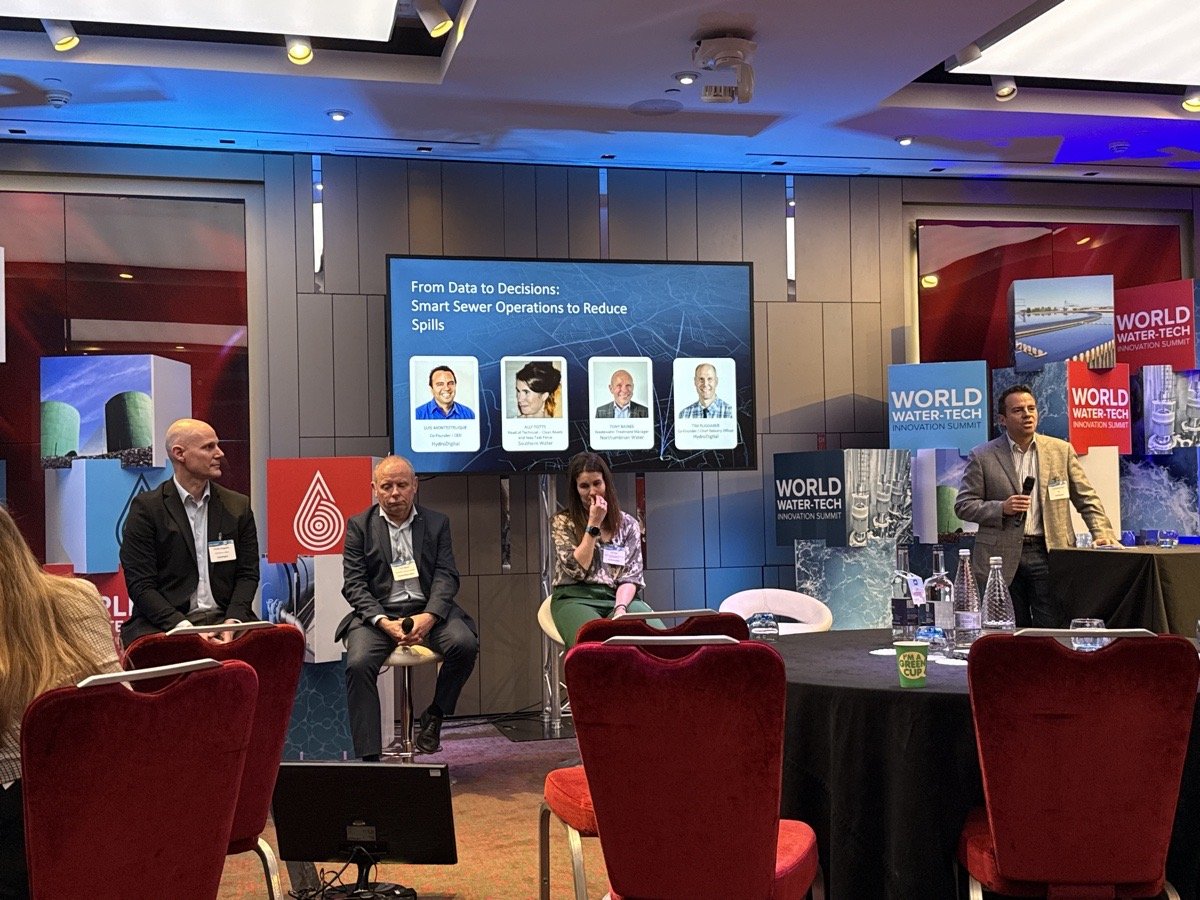
Data, visibility and better decisions
Better visibility across networks and catchments is becoming central to how organisations approach flood risk.
What stood out was how technology is being applied in a more practical way. Anglian Water’s “Hive” platform is a good example. Built in-house using Esri’s ArcGIS Online and Experience Builder, it brings together data from multiple systems into one place.
Information that would normally sit separately — telemetry, asset data, weather inputs, work orders and flood alerts — is layered together so it can be switched on or off as needed. It gives teams a clearer picture of what is happening in real time.
For flood risk, that visibility matters. Understanding how rainfall moves through a catchment, where capacity is available and where pressure is building allows for a more proactive approach.
There is also growing interest in combining data sources. Satellite analysis, sensors and inspection data can all contribute to a more targeted understanding of risk. Rather than trying to monitor everything, the focus shifts towards identifying the areas that matter most.


DIVE RIGHT IN
Sign up to our newsletter
People, skills and the experience gap
Alongside all the discussion around technology sits a more fundamental challenge. Across the sector, many of the people who understand these systems best are approaching retirement.
The so-called “silver tsunami” is very real. A significant proportion of the workforce could leave over the next five to ten years, taking with them decades of experience. This is not just about numbers, but about knowledge built up over time.
This isn’t something you can capture in an operation manual. It is learned through experience, and once it’s gone, it is difficult to replace.
At the same time, the sector is becoming more reliant on digital tools and data. That creates a different set of skills requirements, and the challenge is managing that transition without losing what already exists.
From data to decisions
Another theme was the move towards more targeted, risk-based decision making. Rather than trying to monitor everything 100% percent of the time - which simply isn’t possible - there is growing confidence in using data to focus attention where it is most needed.
For flood risk, that shift is important. Understanding where systems are under pressure and where interventions will have the greatest impact allows for a more proactive approach.
However, more data does not automatically lead to better outcomes. What matters is how that data is used, particularly where responsibilities sit across multiple organisations.
Different teams, assets and priorities all need to align if that intelligence is going to translate into real-world outcomes. That is where the gap still exists.
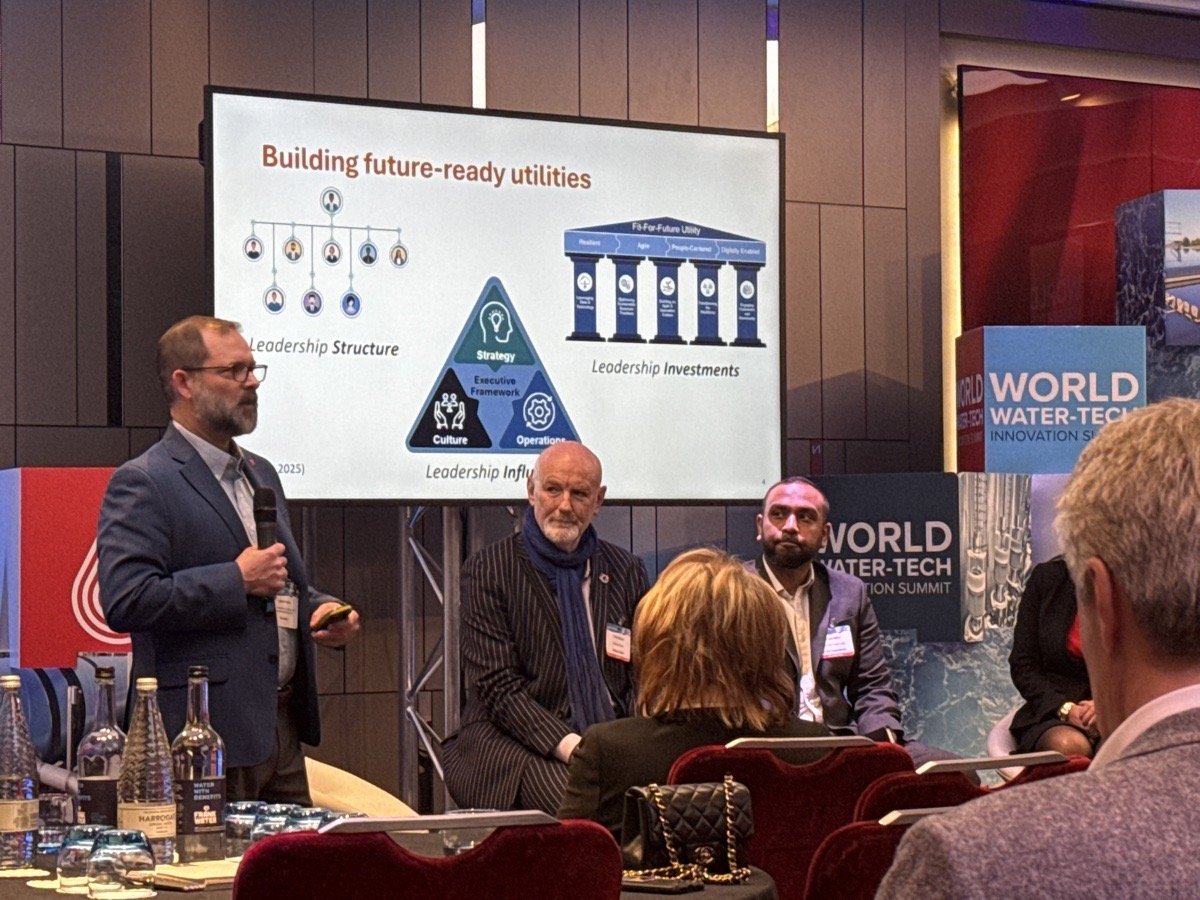
From direction to delivery
Walking back along the Thames that evening, it was difficult not to reflect on the gap between what is being discussed and what people are experiencing. Flooding, pollution and infrastructure failures are becoming more visible, and public expectations are changing.
Even with that awareness, much of what happens within the system remains hidden. It takes place underground or behind the scenes. Out of sight, out of mind still applies more often than it should.
There is no shortage of ambition. The direction is there, supported by policy and investment. What matters now is delivery. With climate pressures increasing and public expectations rising, the pace of progress matters more than ever.