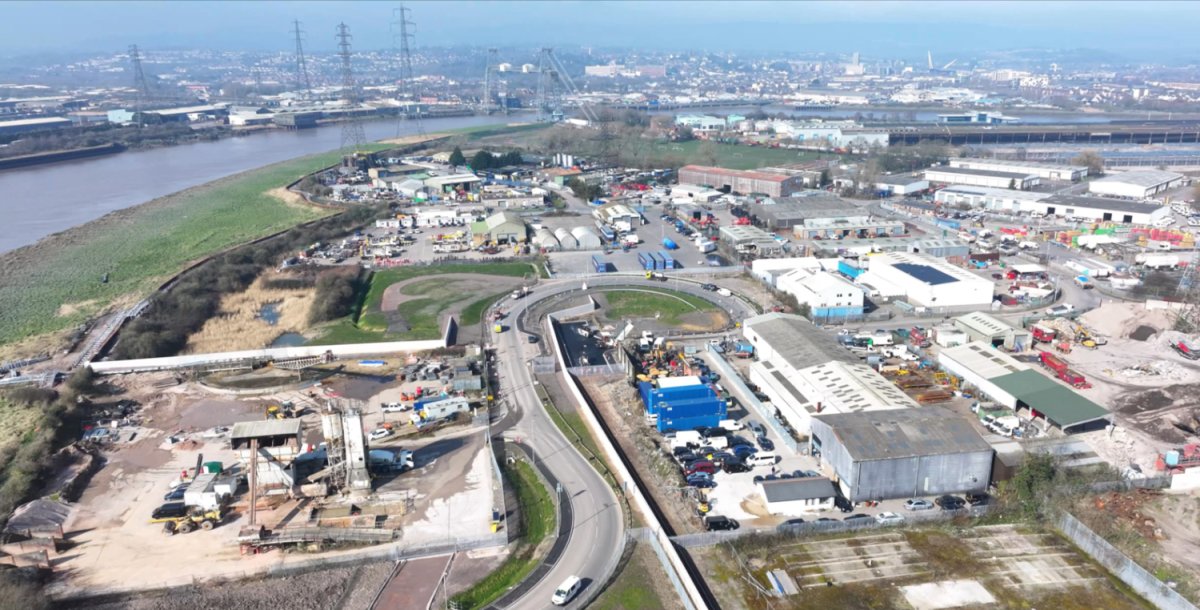
The completion of the Stephenson Street Flood Scheme in Newport marks one of the most significant recent investments in flood resilience in Wales - an undertaking that combined complex engineering, climate adaptation, and community‑focused placemaking. The scheme is an example of how modern flood defence infrastructure can deliver far broader benefits than flood protection alone.
The project is situated along the left bank of the River Usk, an area historically vulnerable to tidal flooding. Homes, businesses, transport links and recreational amenities have long faced the threat from aging embankments with low spots prone to overtopping. Flood modelling found that more than 190 homes and 620 businesses were already at risk. Without intervention, this could increase to as many as 1,120 homes and 1,020 businesses by 2069.
Natural Resources Wales (NRW) appointed Arup to develop the case for change, followed by consenting and design. Arup was joined by contractors Griffiths to deliver the improvements to transform the fragmented, ageing embankment into an integrated flood risk management system, engineered to perform under present and future climate conditions.
Engineering a modern tidal defence
The Stephenson Street scheme delivers approximately 2km of raised flood defences, comprised flood bunds, sheet pile walls, and reinforced concrete structures built to accommodate sea‑level rise projections. A 9‑metre‑wide floodgate beneath a rail overbridge, and 0.7km of new highway infrastructure ensure emergency egress when tides require the gate to be closed.
One of the defining engineering innovations was prompted by the team’s response to Newport’s notoriously soft tidal flat deposits. Traditional piled foundations, high in carbon and cost, were replaced with an innovative prefabricated vertical drain and surcharge system designed to accelerate settlement during construction. This approach eliminated decades of post‑construction creep and significantly reduced embodied carbon.
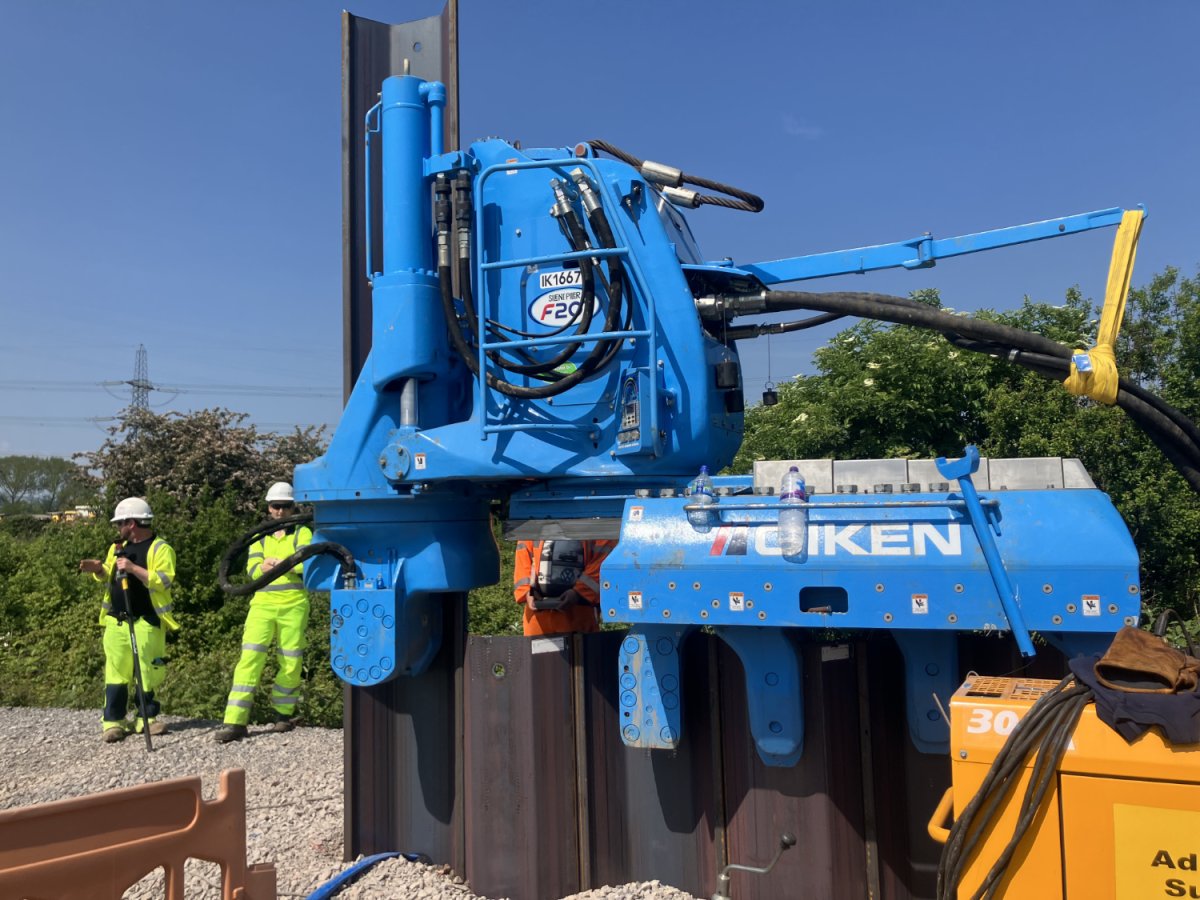
In constrained sections of the site near sensitive salt marsh habitat, Griffiths adopted the GIKEN silent press‑piling system, a reaction‑based, vibration‑free technique that eliminated risks to migratory fish species and adjacent industrial assets. The project's narrow working conditions along the River Usk meant traditional crane access was not feasible. The Giken GRB system enabled footprint‑free sheet pile installation, avoiding the need for cranes or temporary platforms, reducing environmental footprint and programme complexity.
Low‑carbon materials and sustainable use of resources
From inception, the project set ambitious carbon reduction targets. Cement‑replacement concrete mixes were used throughout to eliminate traditional Portland cement, while eco‑sheet piles, manufactured with recycled steel and renewable energy, achieved a 40% reduction in embodied carbon.
Sustainable management of excavated material was another priority. Approximately 3,500m³ of site‑won soils were reconditioned and reused within the flood bund rather than being disposed of off‑site. This significantly cut transport impacts and resource consumption.


DIVE RIGHT IN
Sign up to our newsletter
Enhancing Newport’s green and blue spaces
While primarily a flood defence scheme, the project has delivered substantial environmental and community benefits. Enhancements to the Wales Coast Path create new accessible routes with improved gradients, surfacing, and resting areas. Local biodiversity was strengthened through targeted habitat interventions, including new otter holts, bat features, bird boxes, bee-friendly planting, and ecological improvements designed to reduce disturbance during construction.
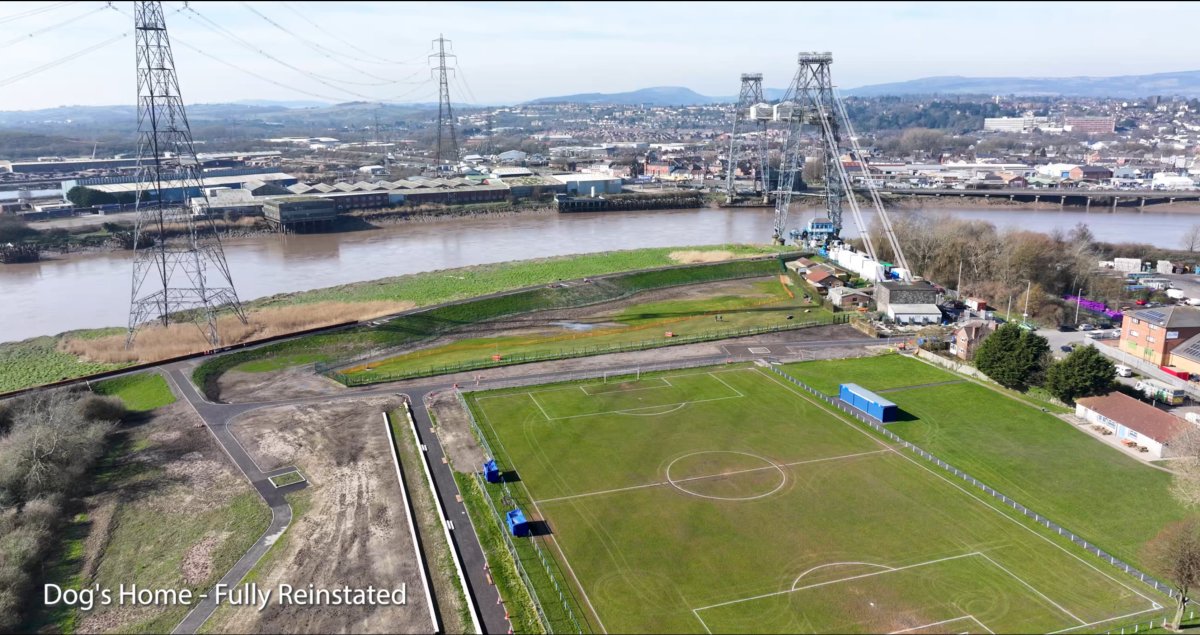
The scheme’s landscape-led approach reshaped the adjacent amenity of Coronation Park into a multifunctional green space featuring a circular walking route, new footpaths, improved viewpoints, wildflower areas, and over 1,600 new trees forming three emerging ‘urban forests’. These interventions help mitigate the removal of approximately 650 trees during construction.
The scheme is a flagship example of sustainable management of natural resources, integrating landscape architecture at an early stage to deliver healthier, more resilient public spaces aligned with NRW’s wellbeing objectives.
Delivering social value and inclusive design
Inclusivity shaped many of the scheme’s core decisions. The local area of Lliswerry includes communities experiencing deprivation. The project team embedded Equality Impact Assessment and Health Impact Assessment processes throughout design to maximise opportunities to meet these communities’ needs. The scheme includes accessible routing, mobility gates, and resting points to ensure year‑round usability for people of all ages and abilities.
Stakeholder engagement spanning sports clubs, local businesses, councillors, Newport City Dogs Home, public health groups, and charities was continuous. Feedback led to key enhancements such as new community seating areas, improved parkland connectivity, and upgraded public realm at the heritage Newport Transporter Bridge landing area.
The project teams from NRW, Arup and Griffiths also delivered extensive educational outreach via STEM events, site visits, and local apprenticeships through collaboration with local universities and with the Chartered Institution of Water and Environmental Management. More than 200 students benefited from hands‑on exposure to sustainable engineering and flood risk management practices.
A collaborative delivery model
The scheme’s delivery model was marked by close collaboration between client, designer and contractor – an approach credited with reducing risk, improving buildability, and supporting cost certainty. National and local supply chains were prioritised, and local businesses were integrated into logistics and support functions.
A decade‑long relationship between NRW and Arup, spanning early business case development through to detailed design and construction supervision, was central to maintaining continuity of knowledge and mitigating interface risks.
A blueprint for future flood resilience
The Stephenson Street Flood Scheme aligns with a wider strategic shift in Wales toward climate‑resilient, socially grounded and low‑carbon infrastructure. At its official opening, Deputy First Minister Huw Irranca‑Davies described the scheme as a “significant investment in Newport’s future” and a model for supporting the well-being of communities facing rising climate pressures.
The scheme’s engineering innovations, community‑integrated landscape design, and successful navigation of environmental constraints have made it a case study for best practice across Wales and beyond. It has already been showcased in NRW’s Be Flood Ready initiatives and at the Wales National Access Forum. It continues to inform national approaches to flood and coastal erosion risk management.
As Welsh coastal towns and cities prepare for increasingly volatile tidal conditions, the Stephenson Street scheme stands out not only for the scale of protection it delivers but also as a demonstration of how flood infrastructure can support regeneration, biodiversity, social value and climate resilience in tandem.